
How May Day Strong Builds the 'Suddenly'
“How did you go bankrupt?” “Two ways. Gradually and then suddenly.”
The way Hemingway’s Mike Campbell saw bankruptcy in The Sun Also Rises can be a useful frame for seeing almost everything, especially progress, especially if you’ve been watching what’s been going on in Wisconsin since the 2024 election.
Last month, progressives cemented their majority on the state’s Supreme Court as Democratic-backed candidate Chris Taylor won election to the bench. It was a victory that successfully defended the seat they gained after defeating Elon Musk’s candidate so badly in last year’s election that he pretended this one didn’t even happen.
Then, 13 years after Act 10 stripped Wisconsin public-sector workers of collective bargaining rights, the impact of the 2024 court ruling that restored those rights was fully felt this Friday as they exercised them for the first time in over a decade. While the legal battle continues in the Wisconsin Court of Appeals, the momentum is undeniable. Thirteen years of legal slog, organizing in the dark and the light, building infrastructure that endures—and before you know it, gradually becomes a suddenly.
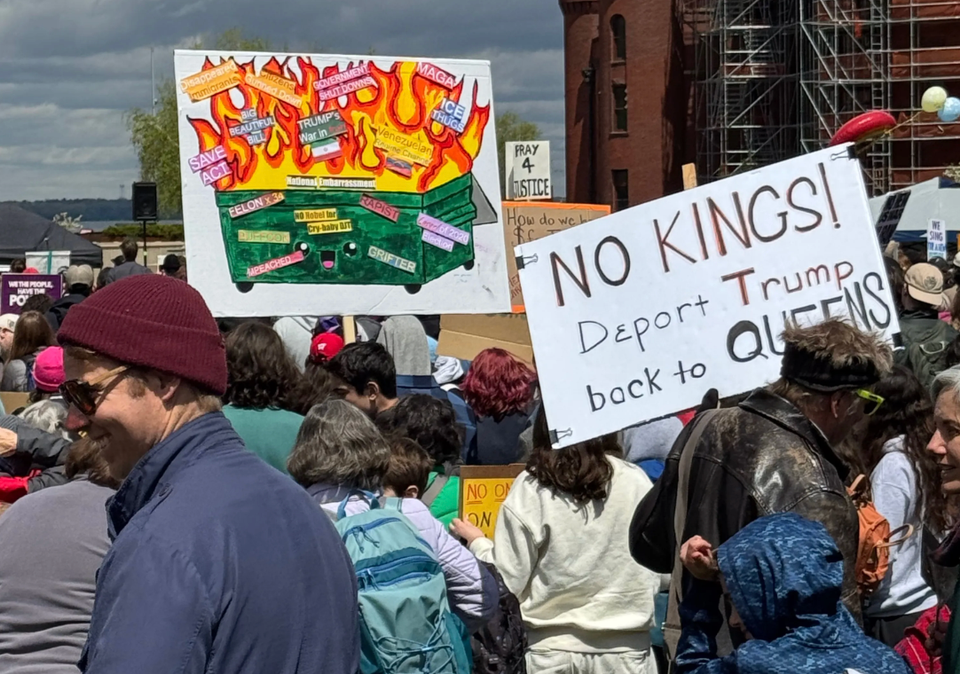
Then, on the same day, a national coalition representing millions of union members and students joined the May Day Strong call for non-cooperation, with Wisconsin leading the way through historic school and business closures.
From the Wisconsin Examiner’s report on the action in Madison:
The march brought out thousands of Wisconsinites angry about increased federal immigration enforcement... school closings on Friday as teachers and students joined the May Day march showed that “educators understand the urgency of this moment.” ... Silvey said 250 immigrant-led businesses across 17 cities in Wisconsin shut down for the day.
Wisconsin’s capital city offers a sparkling fractal, revealing the glimmers of building success. Friday’s events mark the No Kings movement moving toward economic non-cooperation with more than 3,000 planned events, 500 unions on board, and as many as 100,000 students “striking” by walking out of class. This included the Madison Metropolitan School District, which cancelled classes after 70% of staff signed on to the action.
From Protest to Non-Cooperation
Civil resistance scholar Erica Chenoweth explains the power of moving beyond protest. She says non-violent resistance works when “unarmed civilians use protests, boycotts, strikes, stay-aways, other forms of non-cooperation” to impose costs the regime can’t handle.
Protest is a way to publicly put your foot down. Non-cooperation puts your foot directly on the money hose.
Preliminary findings from Dana R. Fisher’s Protest Project show a movement that has crossed that line. 89% of participants took part in a total shopping boycott; 32% of participants stayed out of work. Add the 20% drop in Tesla stock so far in 2026, and you have a coalition that has moved past wanting to be heard and into the business of making things stop.
The Demographic Wall
Here comes the honesty it’s going to take to defeat fascism.
The movement opposing tyranny in America is geographically broader than ever, but geographic breadth is not demographic breadth. The survey data from May Day Strong is stark: 94% of participants were white, 78% held a university degree, and the median age was 71.
This matters because the 3.5% threshold actually requires broadening the base of resistance. A 3.5% that is 94% white with a median age of 71 is not yet the cross-cutting force the research describes.
Non-cooperation reaches its maximum leverage when the people running the machines withdraw alongside the retirees.While the "vanguard" at the rallies remains older and whiter, the real-world leverage was seen in the 250 immigrant-led businesses that shuttered for the day. A high-functioning movement cannot achieve victory without a genuine hand-off between these two groups.
The Infrastructure
The organizational machinery is more sophisticated than it was six months ago. 68% of hosts and 50% of participants heard about May Day Strong through an organization—not an algorithm, but word of mouth. That’s both the strength of this movement and its limitation, as the word is traveling mostly to people who look like the people who already participate.
Wisconsin proved that infrastructure eventually produces impact. The people in the streets on Friday weren’t performing—they were building the capacity required to turn a thirteen-year crawl into a sudden win. The goal isn’t just to reach 3.5%. It’s to be a 3.5% that offers most of the remaining 96.5% a mirror into what we can become.
Member discussion