MAGA Stole Obama’s Playbook
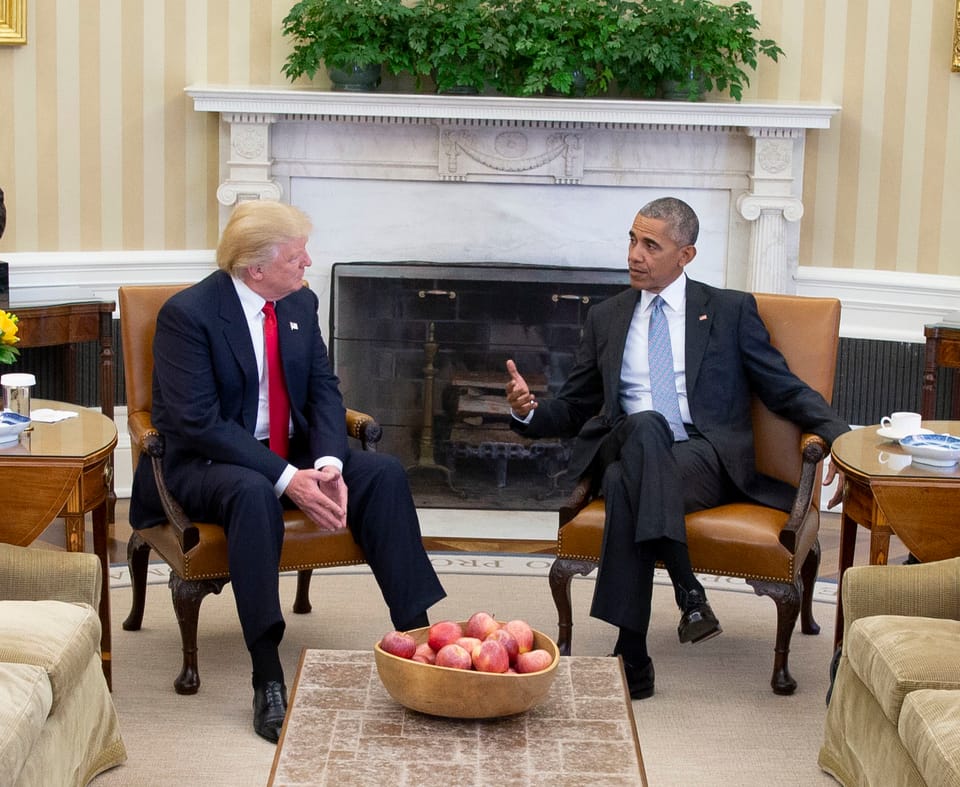
There were two playbooks. I didn’t know about the second one until I read “What MAGA Can Teach Democrats About Organizing—and Infighting” by Charles Duhigg in The New Yorker, upon a recommendation from Gregg Gonsalves on Bluesky.
The first: a 69-page pandemic preparedness document handed to Trump at transition. Tabletop exercises. A dedicated NSC office. Trump disbanded it. Obama said it plainly at a 2024 rally: “He ignored it. And three years later, a pandemic hits.” We’ll never know how many people would have been saved if Trump had just let the experts still in the government follow that playbook.
The second: Obama’s organizing manual from the 2008 campaign, which attracted 2.2 million volunteers. The book about it, Groundbreakers, became required reading for Tea Party organizers, and Charlie Kirk—the guy who, it turns out, must have been the caulk keeping the entire MAGA coalition together while keeping Trump, somewhat, focused on planet earth. Democrats ran the playbook once, looked forward, and not backward. MAGA picked it up and put tens of billions of dollars behind it.
Republicans ignored the playbook that could have saved lives and studied the one that would give them power. That’s called priorities.
Two acronyms born back when Reagan still had his memory
I. DARE
For me, little 80s me, DARE was rad. A break from class. A cop teasing the idea he’d show us his gun if we were good enough, just to keep us interested in the goofy role plays that were just basically a kids’ version of How to Get to ‘Just Say No’. The merch almost seemed designed to be ironic. It was a nearly perfect implementation of the 80s “appearance above all” approach.
A collaboration of the LAPD and the LAUSD, Drug Abuse Resistance Education spread across the country like the drug war, from the top down. Reagan declared a National DARE Day with the enthusiasm of a rich white man who’d found his Gary Coleman. Then, after years and years of implementation, the data came in.
“Multiple studies showed that some students even reported more drug use than nonparticipants, in part because the curriculum made them curious about experimenting,” Duhigg wrote.
So, quietly, it just stopped happening. Schools moved on. If you saw a kid wearing a DARE shirt who wasn’t high, you were allowed to take it.
II. MADD
MADD’s origins were the definition of grassroots. One mom, Candy Lightner, who’d lost her daughter to a drunk driver, quit her real estate career and dedicated herself to building a network of groups to save others from such an unimaginable loss. Other moms read about the effort and wanted to do the same. Lightner welcomed them to the fight and offered only encouragement and tips. “She essentially gave them permission to use whatever attention-getting tactics they thought best,” Duhigg explained. This free-floating ambition mirrored or was the result of the chaos at the top of the organization, which was overcome with mini-scandals of the sort you’d imagine from a truly homespun group, “…local MADD leaders often supported sets of policy recommendations that diverged—or even conflicted—with the agendas of other chapters.”
But despite it all, somehow it worked. The “chaos at headquarters” unpredictably led to “helping members to become leaders on their own.” When Lightner was pushed out, there were moms all over the place who could step up, and the franchise model led it to become “one of the most successful advocacy groups in the US.”
“The story of MADD suggests,” Duhigg wrote, “that organizing is more important than mobilizing.”
MAGA is MADD. Democrats are DARE.
In the first year of Trump’s second regime, Duhigg spent six months inside MAGA. He came back with a verdict that’s as simple as it is revealing: the Democratic Party has become DARE. MAGA is MADD. And they stay MADD, even after a coup or Trump drives us into another global disaster that will end with us sweeping our neighbor’s leg at Kroger to get the last pack of Charmin.
Here’s the difference. You mobilize people to do a thing once. You organize people into the kind of folks who just do the thing without being asked twice. DARE mobilized and withered away. MADD organized and still thrives today, having generally won in its mission to get the government to take impaired driving seriously.
Duhigg’s best example of how “Democrats pioneered the MADD model in politics, and then MAGA stole it” is a group that appeared, like Trump’s Republican political ambitions, in Obama’s first term. After 2008, a longtime religious Republican operative of questionable morals, Ralph Reed, began studying exit polls to understand why so many conservatives had crossed over for Obama. He saw that the Obama campaign was willing to empower volunteers in ways that make campaign staff nervous — acting as both outreach and research-and-development for the movement. That insight fueled the evolution of the Christian Coalition into the Faith & Freedom Coalition. The franchisees Reed blessed spread quickly with a mentality that this was about building the America they wanted all the time.
“The election is just the by-product,” one franchisee told Duhigg.
That wasn’t enough to win by itself. But it connected real humans and real communities to the right-wing media machine that billionaires had spent decades building. And when Elon added Twitter to that stack, it mirrored the same bottom-up empowerment that made MAGA feel like the Obama campaign—and unlike anything the Reagan/Bush Christian Right had ever managed.
The retail version of this played out on college campuses, where Kirk’s “Prove Me Wrong” rallies looked like open debate but were something colder. Duhigg reads the Kirk anecdote generously. I don’t. When a gay student approached the mic at a Turning Point rally in Madison, Kirk told him he disapproved of his “lifestyle,” then said that if they could agree on closing the border, “we welcome you to the conservative movement.” That’s not a wide door. That’s a sorting mechanism. You find out fast whether someone will subordinate their identity to the movement’s priorities. Say no, and you’ve just handed Kirk a live enemy to perform against in front of three thousand people. Either outcome serves Kirk’s organizing, which is entirely based on pointing at (usually powerless) enemies.
That’s no open tent. It’s a funnel. It’s what you need when your movement is about subordinating the needs of the richest 1% over everyone else. The question, then, is what organizing looks like when the movement isn’t built on a lie — when you don’t need a funnel because you’re not asking 99% of people to act against their own interests.
Democrats have a version of this, too. Sort of.
Here’s the exception that must be named: Indivisible.
If you’re reading this, you should know that former congressional staffers, Leah Greenberg and Ezra Levin, wrote a 23-page Google Doc in the weeks after Trump won in 2016, explaining how to pressure members of Congress the way the Tea Party had — constituent power, district offices, town halls. It went viral. By 2017, there were over 5,000 local chapters across all 50 states. It helped flip the House in 2018. When Trump won again in 2024, more than 1,200 chapters reactivated within weeks. The neurocircuitry of the resistance was already thriving.
The model is deliberately MADD-shaped: centralized enough to provide a toolkit and a name, decentralized enough that each chapter does its own thing. Local leaders decide their tactics. National headquarters offers resources and coordination but doesn’t run the chapters. Chapters have gone after Democrats they thought were too conciliatory, including the Senate minority.
The asterisk: Indivisible’s founders are clear-eyed that this is a defensive model. Their updated guide for Trump 2.0 says plainly, “This guide is narrow, it is short-term, and it is defensive in nature. It is not a guide for how we build the world we want to see.” That honesty is its own kind of useful. But it’s also the gap. Indivisible is good at MADD. But it’s not built around a positive economic vision that can win converts.
That’s the missing piece. Guess who found it?
What Zohran Mamdani built — and why it felt like something we’d forgotten
There’s a version of this where Zohran Mamdani is just a gifted politician who made good videos. That’s true, but it could not miss the point more. The videos were apertures. Each pointed to a volunteer page. Every signup fed a canvass. Every canvas left people feeling they’d joined something rather than consumed something.
104,000 volunteers. Three million doors. 4.5 million calls. 700 people who became field leads and ran their own canvases the following week — not because anyone paid them, but because by then it was theirs. As E.J. Dionne noted, it was a winning citywide campaign built from nothing in months. Obama built the same thing in 2008. Before the party decided it was done.
How Bernie would have won
Mamdani spoke with Trump voters early, not to argue but to hear them out. What did they care about? Cost of living. Rent. Groceries. The bus. It’s a reminder that the ancient hatreds Trump conjures aren’t related to the world we live in but designed to ignore the real problems right-wing politics are always determined to make worse.
Mamdani didn’t just build a platform. He built a deep story. Yes, “freeze the rent, free buses, city grocery stores, free childcare” is a laundry list, but it’s also a throughline. Government should be doing more to make your life easier and better.
And here’s a secret. That’s always been Bernie’s whole argument. The system is rigged upward; the people who rigged it have names, but we can just call them “the millionaires and billionaires.” Yes. But what are the said millionaires and billionaires denying you? The better life your family deserves.
Mamdani made this pointed critique joyous.
The establishment spent a decade echoing the right-wing media’s parodies and critiques of democratic socialism, which is basically Nordic governance but for a multiracial democracy, calling this unelectable. Mamdani ran it in the most expensive, media-saturated, establishment-defended city in America as the Murdoch machine and Trump raged at him and propped up Andrew, the savage Cuomo scion. And Mamdani won by eight points.
And the campaign, upon victory, did the opposite of what Obama 2008 did. It made a commitment to continuing the organizing at the heart of the campaign that had just rewritten what was possible.
Why a tip from Gregg Gonsalves matters
This brings us back to Gregg Gonsalves—MacArthur Fellow, epidemiologist, Yale professor, and great early morning Bluesky follow—who walked into ACT UP Boston in the late 1980s because there were no drugs that worked and he needed something that might keep his partner alive. And seeing him still in the fight—mostly to try to save our medical and research system from the purposeful destruction being wrought by Bobby Kennedy Jr. on behalf of the Trump megadonor that propped up his presidential campaign, and who knows else—is a constant inspiration.
What can we take from his 35 years of raging against a machine that would gladly let our friends and family die if it might make the richest slightly richer, or simply entertain them?
“Each major nonmedical advance,” Gonsalves wrote, “was extracted from leaders who refused to do the right thing until they were pushed.”
That sentence describes the mentality that drove MADD. It describes Indivisible at its best. It describes Obama 2008. It describes what Mamdani exemplified last November.
Change doesn’t flow from leaders who’ve decided to act. It gets pulled out of them by people who made showing up a habit, a guiding obsession.
This is how we do it
Here, I want to summarize my recent post that went somewhat viral (for me) about what activists are teaching us about fighting Trumpism. You can just read it, but let’s review, because what we’re working toward here is an accumulation of knowledge that stays with us and helps us win. And Duhigg’s reporting only confirms, I believe, these contentions.
In short:
- Democrats spent $880M on ads in 2024 aimed at 3% of voters who’d mostly made up their minds. All of that is about mobilization. Not organizing.
- Activists against Trump 2 have given us the model for fighting fascism. Neighbors with phones. Whistleblowers. Lawyers at detention centers uninvited. Clergy between ICE and their congregations. The regime lies, activists document, the lie collapses. Every time.
- The reason it works: participatory storytelling. Kate Starbird at UW calls it that. The audience becomes co-author. Sharing footage from Minneapolis wasn’t consuming content — it was adding to the record. That’s MADD, not DARE.
- The scale is beginning to arrive. We look, as always, at the data from Erica Chenoweth and Harvard’s Crowd Counting Consortium: 10 million in the streets, 99% of protests with no arrests, nonviolent campaigns more than twice as effective as violent ones across a century of history. The regime needs the resistance to look volatile. The movement has declined to provide it.
- The infrastructure exists. The Movement Voter Project has vetted hundreds of groups in the places elections actually turn. Doors in North Carolina. Wisconsin’s Supreme Court. Organizers trained this spring, always, not just October.
In sum: Indivisible picked up part of it. Mamdani showed what the rest could look like. Gonsalves has been living the whole thing for thirty-five years. The neighbors in bathrobes already figured it out. Let’s fund LOTS more of that all the time everywhere instead of just buying ads that hum like refrigerators.
Why Democrats Mothballed It
Here’s the part everybody knows, in the Leonard Cohen sense, but can’t really figure out how to discuss without seeming bitter or defeated. Obama’s organizing machine wasn’t mothballed by accident. It was murder by powerful people with a motive.
Micah Sifry documented the whole thing for The New Republic in 2017. The plan was called Movement 2.0. Two million active supporters. Thirteen million email addresses. The most powerful political organizing infrastructure in American history, built and ready to go. John Podesta told the people who wanted to keep it running that there was “heartburn from the political crowd.” There’s, as we said in the 80s, the beef.
The beef had a name: Rahm Emanuel, Obama’s first chief of staff, who locked down Organizing for America so completely that when activists approached OFA about targeting conservative Democrats blocking the public option, the answer was: “We won’t give you call lists. We can’t go after Democrats — we’re part of the DNC.” When those activists planned to run ads anyway, Emanuel called them “fucking r&tarded.”
He is currently being floated, by people who should know better, as a 2028 Democratic presidential candidate. He is DARE in a suit. He must be shunned into oblivion.
The political crowd—Axelrod, Plouffe, the donor-facing professionals—didn’t resent grassroots organizing because it didn’t work. They resented it because it did, in ways they couldn’t control. A Democratic donor writing a $10 million check doesn’t want unpredictable. He wants access and some pretense of consistency. He wants to know what the party will do before it does it, and 2.2 million people who made showing up their personal mission cannot provide that. So the greatest organizing machine of a generation got folded into the DNC, where it could be managed to death. By 2010, it was gone.
The stakes of that decision bombard us daily with news notifications of new horrors committed in our name.
“They are currently harming countless people on the streets, from assault to murder, and in dozens of cases killing detainees in detention. They are assassinating and kidnapping foreign tyrants, along with murdering schoolchildren over the weekend,” Andrea Pitzer wrote this week.
The argument to every big donor writing a check right now is this: you paid for predictability and got Trump. The grassroots will happen with or without your money because the people will not abide by this. It’s already happening, in church basements and living rooms and town halls you didn’t sanction. The only question is whether you’re the person who funded the machine that could win, or the person who managed it into irrelevance while the bodies of the schoolchildren were counted.
Sorry. It’s hard not to get deep, accusatory, and miserable considering the horrors our tax dollars are sponsoring, because of the errors of people who just wanted everything to be normal and nice. Sorry. It doesn’t work like that. Unfortunately, we must stay MADD. There’s no other decent option.
Thanks for finding this. If you like what you’ve found, subscribe toTHE FARCE newsletter, join the LOLGOP Studios Patreon, or drop a tip. Free or paid, your support matters.
Member discussion