The man who cannot lose is losing. He still can't stop.
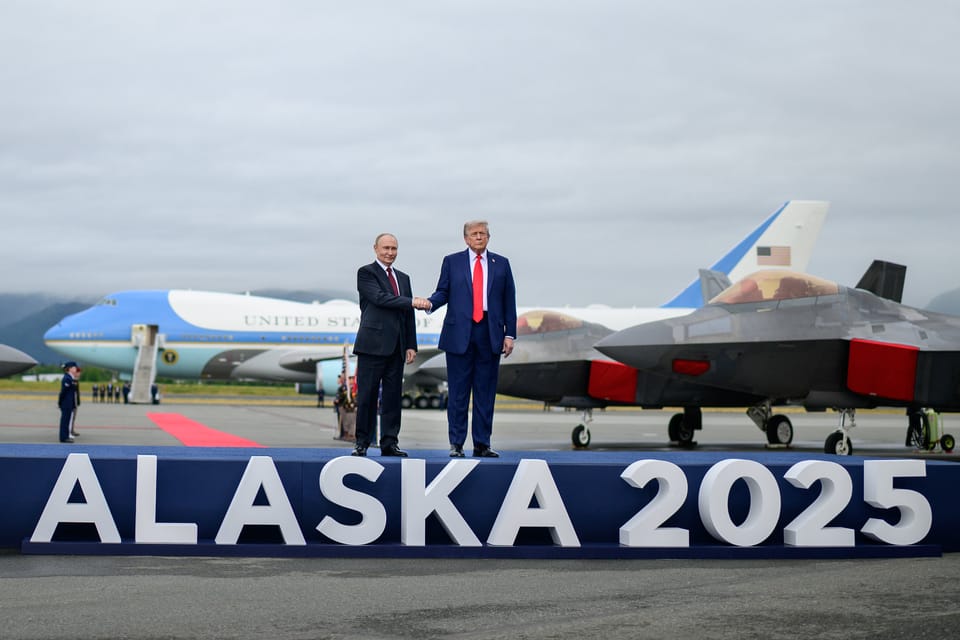
We keep expecting the most natural thing from Donald Trump, the thing we would feel nonstop if we were Donald Trump: Shame.
But he doesn’t think he’s a normal politician or human being. He doesn’t act like one. He isn’t treated like one, especially by the Republicans on the Supreme Court or the rich guys who freebase racism and tax cuts. But let’s imagine something ridiculous for a second. What if he were?
A normal president squatting over these numbers would be in crisis. Thirty-seven percent approval. Fifty-six percent disapproval. An Iran war that 53 percent of the country opposes. Independent voters oppose the war by more than two to one. His approval rating among men, the demographic that carried him back to power, has hit a new low. A majority of Americans now believe their children will be financially worse off than they were. The White House press shop’s response: “The ultimate poll was November 5, 2024.” A normal president would be meeting with consultants and drafting an exit strategy. A normal president would feel the ground moving and, at the very least, stop spending the early hours of the morning posting veiled threats against the very members of the Supreme Court that made his illegitimate return to power possible.
Trump told the New York Post: “I think that the polling is very good, but I don’t care about polling."
Part of why those numbers don’t produce a normal press response is that we no longer have a normal press. David Roberts has been saying it for years, loudly enough to grow a bit crackers from the repetition: the right ran a massive, well-funded campaign to take over political media and the infosphere. It is the biggest political fact of the last half-century, upstream of virtually every other problem you can name, and mainstream discourse almost never speaks it aloud. Earnest liberals describe the symptoms to him in granular detail—the public has “lost trust in government,” the public is “obsessed with trans girls in sports”—and then refuse to name the vector that infected their mind.
But media capture is only part of the explanation.
Trump doesn’t just benefit from a captured information environment. He activates something the captured environment didn’t create—it only amplified. Strict father morality is not a right-wing invention. It is a set of instincts present in virtually every human being to some degree: the pull toward the strong leader, the belief that dominance signals competence, the sense that someone who never backs down must know something the rest of us don’t. The right didn’t install those instincts. They built a media ecosystem tuned to that frequency and learned to amplify and exploit it.
Which means the con was never just for MAGA. During the worst democratic decline ever recorded, it was general over America—not equally; some far more than others—and the distance between those positions is the distance between people who joined the resistance and people still waiting to be told it’s as bad as it looks. But there’s an instinct that keeps people from saying the obvious—that this man is a treacherous failure, the biggest thief in US history, this war is a catastrophe, the polls are real, and his bones are as big a liar as he is. That instinct doesn’t belong only to his voters. It runs in all of us. It’s the thing that makes us keep expecting shame from a man who has no use for it.
Understanding that is not about sinking you into deeper despair. It’s how we get out.
Trump broke the feedback loop not by being immune to losing — he lost in 2020, and it nearly destroyed him — but by being incapable of registering loss as information. A politician who can’t admit error can’t correct course. His voters don’t need him to be right. They need him to be certain. He has only ever offered certainty. What else could they need?
Here is the one thing his psychology cannot survive. In the strict father world Trump has built his entire identity inside, there is only one thing worse than being weak: being seen as a loser. A winner is always right, always strong, always victorious. A loser is what happens when the story falls apart. This is why he called soldiers buried at a World War II cemetery "losers.” They died, which in his framework means they failed to win. It is why he spent four years lying about 2020—not to convince anyone, but because accepting the verdict of the election would make him, by his own definition, the thing he cannot be. The entire apparatus of denial, the endless reframing, the "you could say both"—it is all defensive coping built around one terrifying word. The war, the lies, the sycophant cabinet, the rejected British carriers: All of it is a man building a dyke against one word.
He doesn’t lie to be believed. He lies to be repeated. The lie doesn’t need to stick. It just needs to circulate long enough to crowd out what’s true while the next one loads. This is not persuasion. Persuasion requires him to care whether you end up agreeing. What he requires is simpler and more insatiable: your attention.
What the war actually was
The worst single-year decline in American democracy since 1789 came before a single bomb fell on Iran. By February 2026, the math of the midterms was already legible. Democratic candidates were winning in Trump districts. The House was gone in any honest projection. Two years of subpoenas, investigations, a lame-duck rump presidency—the whole humiliating architecture of losing—was visible from Mars.
A man who cannot process failure does not wait for the failure to be delivered. He creates a larger event.
My obvious theory: the war didn’t start because Iran was an imminent threat. His own intelligence said it wasn’t. The decision was made before the decision-makers were allowed in the room. It started because an event at that scale — American planes over Iranian cities, the Strait of Hormuz closed, oil prices spiking to a four-year high — is an event that cannot be ignored. And as long as it cannot be ignored, Donald Trump is the only thing anyone is watching. That’s the win condition. Not a secured strait, which is not capable of gaming out. Not a pacified Iran, which just feels like something Obama could do. Centrality to everything and everyone. The inability to look away from his visage, a never-ending viewing of a man who always wears corpse makeup. He manufactured the thing he needed the way a drowning person grabs whatever is nearest—not with strategy, exactly, but with the animal urgency of a man who cannot survive being ignored.
There is no thought process into what any of this means long-term. It's not coordinated regime change. It's obliteration or just 'bomb them until they're less of a threat.'" The Washington Post Asked about the plan, a US official responded: "Whatever."
Netanyahu needed the war to outlast his corruption trial. Kushner needed it because Saudi Arabia had paid for it — $2 billion into his private equity fund, $25 million a year in management fees, a deal the PIF’s own screening committee recommended rejecting before MBS overruled them — and then MBS made private calls to Trump in February urging the strike. None of them needed to lie to him. They just needed to tell him what the system was already producing on its own: that a deal would be weakness, that bombs would be strength, that history remembers the man who acts. And Putin needed the war to keep running. Russia provided Iran with intelligence to help it target American ships, aircraft, and bases across the Middle East. Trump temporarily eased oil sanctions on Russia in response. Then eased them again. On the Financial Times, Trump explained: “You could also make the case that we helped Ukraine to an extent. It’s hard to say, ‘You’re targeting us, but we’ve been helping Ukraine.’” The administration’s own UN Ambassador acknowledged the “strategic partnership” between Russia and Iran while American soldiers were dying from Iranian strikes. The EU Council President said Russia had been “the only winner from the war in the Middle East.” Putin, the Wall Street Journal reported, can barely conceal a smirk.
At least thirteen American soldiers are dead. At least seventeen people killed in Israel by Iranian strikes. More than a thousand and likely thousands have been killed in Iran. Daily oil exports from the Gulf have plummeted by at least 60%. And the president, asked when it will all end, said: “When I feel it. Feel it in my bones.”
The bones told him it was already won on day seven. He rejected the British carriers then—“We don’t need people that join Wars after we’ve already won!”—and is now demanding that the same allies send ships to clean up the mess. “You could say both,” he told the room when asked to reconcile three contradictory statements about the war’s progress he had made in a single afternoon.
“You could say both.” That is the whole man in three words. Reality is not a constraint. It is a negotiating position. And when it doesn’t go his way? IT’S NOT FAIR!
The credulity chasm runs both ways
Anat Shenker-Osorio has the best explanation for why Trump won. People didn’t believe Project 2025 would actually happen. They didn’t believe it could be this bad. The most predictive factor in voting for Harris versus doing something else wasn’t agreement or disagreement with the agenda. It was whether people believed the agenda would come true. The threat seemed too large, too explicit, too unambiguous to be real.
But the chasm runs the other direction, too. We don’t believe he means it either. It’s hard to believe anyone who rarely gets out a sentence that agrees with itself.
We keep looking for the normal political incentive that will eventually pull him back toward something recognizable as governance. I’m still ashamed that I took a first date to a Coldplay concert in 2004. Why wouldn’t he be ashamed that his old best pal, whom he aided and abetted, and that pal’s partner, whom he is currently aiding and abetting, raped, assaulted, and/or tortured more than 1,000 human beings, most of whom were girls? We assume the shame must be there! Waiting for just the right disclosure to spark it. Total fantasy.
His sycophant cabinet—no adults, just yes-men validating whatever impulse fires through his deteriorating brain at 3 a.m.—guarantees that no one corrects his mistakes before they compound. This is the part we keep misreading as weakness. It is weakness. It is also the condition he requires. A man who cannot tolerate correction will not surround himself with people capable of delivering it.
His cabinet is a fun house mirror, not a check. Every instinct gets confirmed or exaggerated. Every failure gets reframed as a victory. Every bomb that falls wrong gets explained as the other side’s fault, or a framing problem, or evidence that the mission requires more, not less.
As his numbers sink, the spiral only tightens—more racism, more saber-rattling, more desperation disguised as dominance—because admitting error is the one thing the model forbids.
What actually beats it
Here is where we have to stop being students of Trump and start being students of what has actually stopped men like him.
The only thing that has toppled autocracy in U.S. history and in other countries is civil resistance. A sustained, unrelenting group of people showing, not telling, being out in the world, demonstrating their resistance, their refusal, and their ridicule. Not asking the right Democrats to find their spines. Not the devastating editorial. The people in the real world make the failure visible and refuse to let it be replaced by his narration of events.
Shenker-Osorio is precise about the sequence: resist, refuse, ridicule. Ridicule specifically — not because it is funny, but because it is the one input his system cannot process. The ultimate aim of an authoritarian movement is to erode the will to resist. As long as people are resisting, refusing, and ridiculing, it is costly for them. A man who requires centrality, who wins by being watched, who lies not to persuade but to exhaust — that man has one remaining vulnerability. Being seen as small. Being laughed at. Having “already won” placed next to the casualty count every single day until the gap between the claim and the reality becomes impossible for even his own voters to ignore.
What sways public opinion is social proof. People do the things they think people like them do. A resistance visible enough to change what people think other people think is not a side effect of the movement. That is the only way it works. The Montgomery bus boycott didn’t work because it asked nicely. ACT UP didn’t work because it petitioned the right Democrats. They broke into the New York Stock Exchange and hung a banner where the bell is rung. By the end of the month, the price of AZT had dropped. Showing, not telling. The thing you do in the world that makes the person walking past on their way to work register that something is happening.
The rupture that most people haven’t truly felt yet is coming. The oil is expensive today. Thirteen soldiers are in the ground today. The allies he mocked are watching from the sidelines today, pretending to care when necessary. And a man who governs by manufacturing the thing people cannot stop watching is about to discover what happens when the unmissable thing is his own failure — documented, named, refused to be replaced.
He has been telling us for ten years that he makes the future, and he’s been right about that—a lot. But the future is crashing in on him and us because of his overconfidence, impatience, and need to keep us staring at him.
Resist, refuse, ridicule. And do it with as much art, compassion, and perseverance as you can. Because while Trump isn’t capable of shame, he can still see it in the faces of everyone around him and—where it matters most—on TV.
Member discussion