We Could Still Save Millions of the Kids Musk Condemned to Death
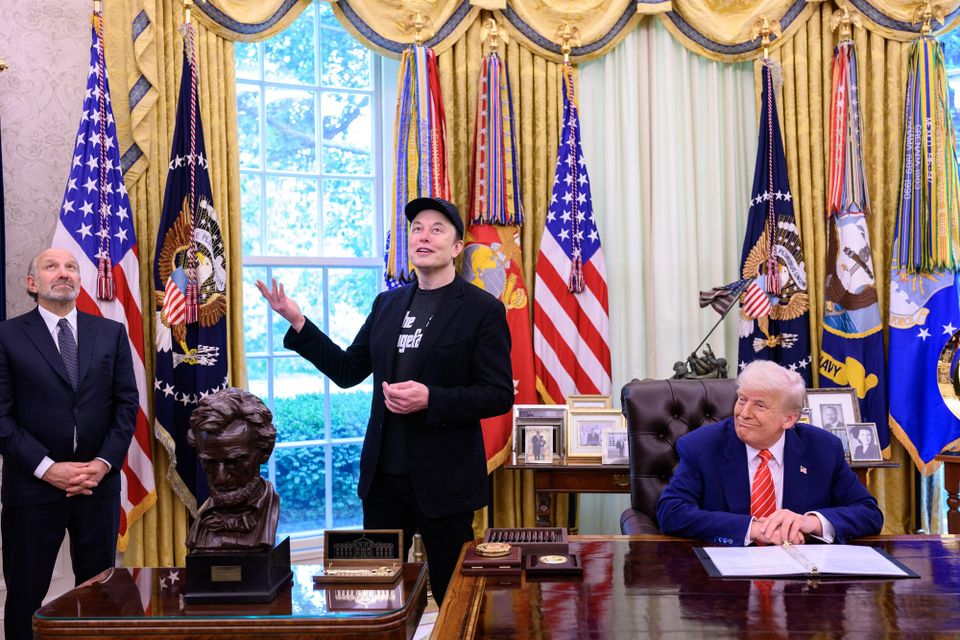
The good news is we’re finally having a discussion about how many kids alleged trillionaire Elon Musk sent to their deaths.
And the person we have to thank for this? Elon Musk.
As the unfortunate yet useful idiom goes: a hit dog hollers. When Rep. Ro Khanna noted on Fox Business what UCLA researchers had found—that the Musk-led DOGE demolition of USAID in the first throes of this regime could kill up to 4.5 million kids—Elon could have done the smart thing and ignored it. He could have ignored it just like all the misery he and his buddies at DOGE inflicted on America as they looted our data. Instead, he decided to do everyone who has been screaming about this atrocity for a year and a half a favor and make his savage cuts national news by threatening to sue Khanna. I imagine actually suing would be taking the favor too far for Musk, who would then give Khanna subpoena power through discovery to conduct some oversight of DOGE’s evils before Democrats take the House.
Instead, he just keeps hollering—whining on X that “There is not even a single dead child! If there were, it would be worldwide headline news!”—offering an embarrassing and sweaty defense that hinges on him not being able to get the starving kids USAID saved on the phone.
“They’re celebrating that he created 4,400 millionaires, but they don’t talk about the 4.5 million children around the world who he possibly sentenced to death,” Khanna said. His response to the lawsuit threat was to challenge Musk to a debate—CNN, CNBC, a university, Musk’s choice of setting—and to formally call for him to testify under oath before the House Oversight Committee.
A spectacle would be good for Khanna, who clearly wants to run for president. But it would only be useful to debate the richest man alive, whose companies got billions in tax breaks as USAID was gutted, if the congressman also made the case that the regime Musk personally installed into power was starving kids at home with the largest food assistance cuts in American history.
ProPublica reported this week that at least 776,000 children have been cut from SNAP since Trump’s domestic policy bill passed—46% of everyone who lost benefits in the dozen states that track data by age. The Center on Budget and Policy Priorities’ updated tracker through March 2026 puts the number at 808,000 children in 13 states—and more states’ cuts are still phasing in. In Arizona alone, 205,223 children lost food assistance, a massive 55% drop. Mariana Chilton, a child hunger expert at UMass Amherst, called it “a public health crisis” in the making and likened hunger in early childhood to a brain injury.
The richest man ever to live is cutting lifelines to the poorest children on earth while slashing food assistance for some of the poorest children in America. It’s hard to think of what else we should be talking about.
Boston University epidemiologist Brooke Nichols estimated last November that 600,000 people had already died—two-thirds of them children—in the months immediately following the USAID cuts. Nicholas Enrich, a former senior USAID global health official, documented what he saw in a whistleblower account titled "Into the Wood Chipper." His prediction: “When the dust settles on the Trump administration, his cuts to USAID will end up being a major part of his legacy, because of just how far-reaching those impacts really are.”
That legacy could also include some attempt to rectify the systemic wrongs that made Musk's pillaging possible.
Gabriel Zucman at UC Berkeley has calculated that a meaningful tax on billionaire wealth would raise roughly $250 billion a year—from people currently paying a 15% effective rate while the warehouse worker behind them in line pays 30%. Musk spent $291 million to purchase the government that protects that 15%. The government that protects it is now gutting SNAP for the children of that warehouse worker.
Michael Hirschorn noted in the New York Times last December that the billionaires had a great thing going until they couldn't stop talking. Dark money worked fine. The Koch brothers ran their operation for decades without most people knowing their names. Musk bragged his way into the public consciousness. Now 61% of Americans tell pollsters they believe the system doesn’t tax billionaires and their corporations enough, a majority say billionaires are a threat to democracy, and the mayor of the city with the most billionaires thinks billionaires shouldn't exist.
Evan Sutton, who helped organize the #TeslaTakedown, said he believes Musk will regret becoming a trillionaire. Musk has been overcome by his own “success” before. Daniel Hunter at Waging Nonviolence documented what the takedown actually did: Musk lost $150 billion of his net worth since mid-December, Tesla sales in Europe are on track to fall by half, and the Tesla board—pushed by major investors—has spent months trying to pull its CEO back from government. That is not karma. That is the most successful campaign of noncooperation in American history, and it happened because people, lots and lots of them, took action. Karma without acts is dead. So it’s time to start manufacturing Musk’s greatest regret.
It felt impossible a few years ago, for instance, to imagine that USAID, the Department of Education, and America’s scientific infrastructure could be gutted in a matter of months. That happened. The impossible ran on a schedule. What should feel equally possible: USAID back, SNAP restored, and millions of people who don’t die. Taxing the people who funded the demolition to rebuild what they destroyed—that is not a fantasy. It’s Musk's big, beautiful bill coming due.
Thanks for finding this. For more insights that change brains, subscribe to THE FARCE newsletter, join the LOLGOP Studios Patreon, or drop a tip. Free or paid, your support matters.
Member discussion