Why There's Still So Much Denial About Elon Musk
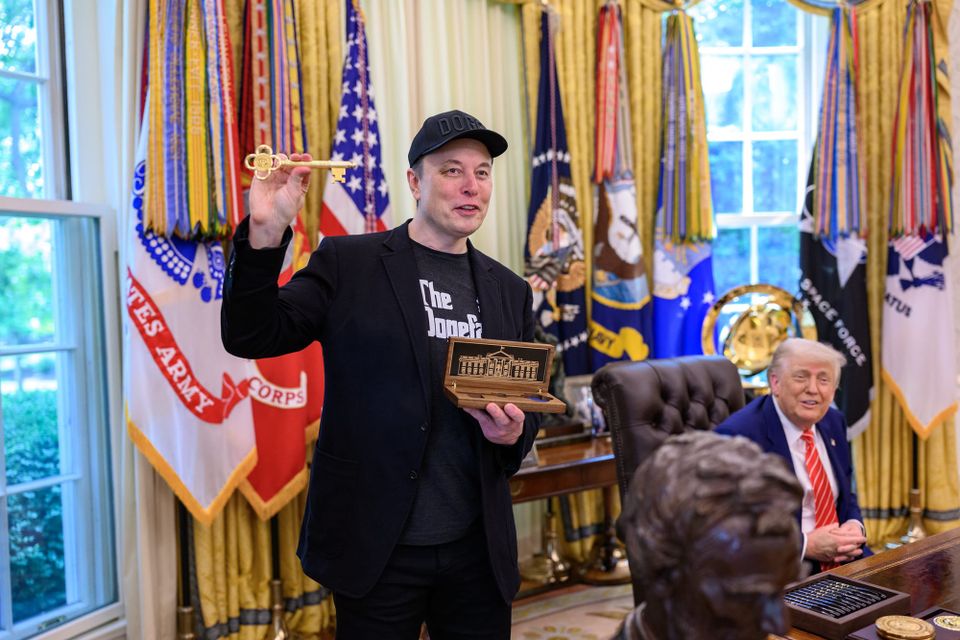
Why can’t we take Elon Musk seriously? His public image is almost completely divorced from reality, which leaves us with the shameful distinction of being even more divorced than Elon Musk.
Last week, Jamelle Bouie took a stinging look into how Musk’s descent into fascist, racist apartheid politics became impossible to ignore online and nearly invisible on CNBC or anywhere normal people (not us) get news. Musk’s real influence comes from the hours he spends fomenting violence and pushing the same ideology behind some of the deadliest shootings in American history. The cars and the rockets are marketing that funds and veils his real addictions.
Some of this denial is just good old American supremacy. If you hate minorities or women, that’s your business, while even the slightest critique of a rich white man requires videotape evidence, a signed confession, and a team of lawyers.
Underestimating his racism and underestimating his corruption stem from the same childish delusion: a desperate refusal to admit the guardrails are gone, and a naive hope that someone else will step in to stop it. We tried to convince ourselves a presidency wasn't for sale. Trump had no such illusions. He completed the transaction in public, handing over the federal government and turning the White House into a Tesla dealership to pay off the debt.
America doesn’t want to admit we’re facing world-historical con men, maybe the two greatest con men to ever live. Their real talent is working sleight of hand while being underestimated, picking your pocket while you’re busy looking for a brown person to blame.
A huge part of the problem is normalcy bias. We turn Elon into the meme he wants to be because laughing at a buffoon is less terrifying than admitting an unhinged oligarch holds the reins of power. Mockery can be good resistance—like Otpor! in Serbia—but it can also just be a defense mechanism. It lets us treat a major power grab like a bad reality show. Or a good one.
We keep assuming we’re living inside the same America we grew up with, the one with something like real checks and real limits.
That system is gone. It’s been gone since 2010.
Citizens United told the country that spending unlimited money on elections counts as speech, and speech can’t corrupt anyone. The Shelby County ruling gutted the Voting Rights Act’s preclearance protections in the same decade, and the states freed by that decision moved quickly, passing strict photo ID laws, closing polling places, and purging voter rolls. Then—this year—the Republicans on the Supreme Court effectively finished off the law Ronald Reagan once called “the crown jewel” of our democracy by making it effectively illegal for states or courts to worry about Black representation in Congress.
Layer those rulings together and reality gets insulting. A voter in much of this country now needs a government-issued ID and hours of patience just to cast one ballot. At the same time, a billionaire can spend anonymously through a dark-money vehicle and buy an entire election without a single voter ever learning his name.
Why don’t people get insulted by this? Why weren’t we in the streets after Citizens United, or the gutting of the VRA? Psychologists call it system justification theory. We desperately need to believe the system still works. Admitting that someone simply bought the election and dismantled federal oversight forces us to accept that the guardrails aren’t just damaged; they’re gone. So, our brains reject the premise to avoid the panic.
And why wouldn’t a billionaire buy the presidency? Look what Musk got for the paltry investment of a rounding error of his wealth. The IRS unit that audits billionaires had lost 38 percent of its enforcement staff; SpaceX had already disclosed $1.9 billion in tax breaks the company itself believes would likely be disallowed on audit. He decimated the part of the government that could have made him pay for what he owed. Add that to the investigations dropped, the rules he helps write that hurt his competitors, and the contracts with little to no oversight from the regime, and he turned our elections into an episode of “Who Wants to Be a Trillionaire?”
Psychology gives us half an explanation for the appeal behind both Musk and Donald Trump. There’s a whole literature on why some people crave a strongman who promises order and needs an enemy to blame. That research explains followers. The rest of us keep asking whether the men on top are geniuses or fools, as if grifter and dangerous were mutually exclusive.
And even the keenest minds alive can be fooled by their own sense that the villains they’re facing cannot be as evil as their actions suggest.
Charlie Chaplin ran into that trap eighty years ago, mocking Hitler as a buffoon in The Great Dictator. He later said that knowing the true scale of the concentration camps would have stopped him from making a comedy of Hitler’s cruelty.
We don’t get his excuse. Models published in The Lancet project that gutting USAID could cause more than 14 million deaths worldwide by 2030, over 4.5 million of them children under five. Those are real kids in real countries, dying of causes a trillionaire and a president found too boring to bother stopping.
We’ve already paid for underestimating them once. In 2024, Anat Shenker-Osorio told me that the single best predictor of whether swing voters rejected Trump was whether they believed he would actually follow through on his threats. Most didn’t. Incredulity, not apathy, decided the election.
We don’t have that excuse now.
Musk just reopened America PAC for the midterms days after Democrats posted their widest generic-ballot lead of the cycle; Musk reactivated America PAC for the midterms, leaning into the same escalation that has defined this administration from day one.
Authoritarian personality theory explains why followers jump into the fire. It does not oblige the rest of us to keep debating whether the men holding the match are geniuses or clowns. They are con men—arguably the two most successful in American history—operating a system tailored for them by Citizens United and a gutted Voting Rights Act.
The naivety that brought us here was a category error, a refusal to accept that a man can be a ridiculous fraud and still be dangerous, or that a rigged system can still be beaten once we stop waiting for karma to do the work for us.
Stop asking if he’s serious. Start asking what he’s costing us, and what he will do if we fail to stop him.
Stop the Trillionaires was built for a single purpose: to force Musk and Trump to pay for precisely what they have proven themselves capable of doing.
Member discussion